What I read
Books that intrigued, fascinated, entertained or delighted me
A lot of people are curious about how others order their books. Some prefer to put them by colour, some split theirs into fiction and non-fiction, some go for arranging them in alphabetical order, some have secret shelves behind those visible where they put books they don't want on immediate display, some place their books higgledy-piggledy...
I could go on and on. As varied as the readers, as varied will the shelves be. It is part of the fun of entering a house and being confronted with books.
For my part, I go for categories with no alphabetical order. Within those categories I may break things down further, which allows me to locate a book with relative ease and without too much difficulty.
Take for example The Penderwicks on Gardam Street by Jeanne Birdsall, one of my absolute favourites and a regular autumn re-read. You would find this on the children's and young adults bookshelf in the 'cheerful sort-of-books' section. If you were - on the other hand - looking for The Burying Beetle by Ann Kelley, you'd search the section above, which houses the 'trickier and/or challenging reads'. For Debi Gliori's Pure Dead Magic you'd look lower down the shelf and into the fantasy section, which starts with younger readers and then segues into Jonathan Stroud's Bartimaeus Trilogy starting with The Amulet of Samarkand.
It may sound confusing but is incredibly helpful if you are a 'mood reader' and just feel like something cheery or darker or more challenging. All you have to do is go the correct section and browse.
As this is a section on what I read, every book presented here will have the title, author name, an introduction as to why I like it and a shelf (or more) it could go on.
Let's demonstrate the shelving principle with Rosie and the Secret of the Snogard ;-)
Shelf: comfy-sort-of-book (adults & children); traditional stories; fantasy (dragons & mythical creatures); mystery; pick-me-up-reads; sense of place
And now I cordially invite you to take a look at some of the books on my shelves.
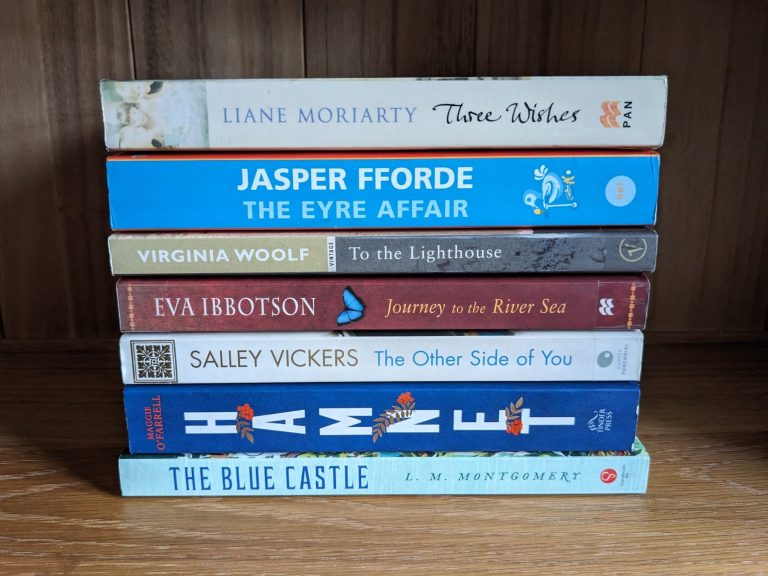
Let's start with these:
I have never been particularly good with beginnings or picking out only a few books among the many I like but these seven feel like a good way to start.
Among them are some of my favourite authors, books and stories. Nearly all of these I have read more than once, twice, forgotten how often...
In some instances they have been part of my life for more than two decades.
They are also all books that I have given copies of to friends and/or family, as I wanted to share these stories and quite often find that a well-placed copy in someone's home is more persuasive (and tempting as it's there!) than a mere recommendation.
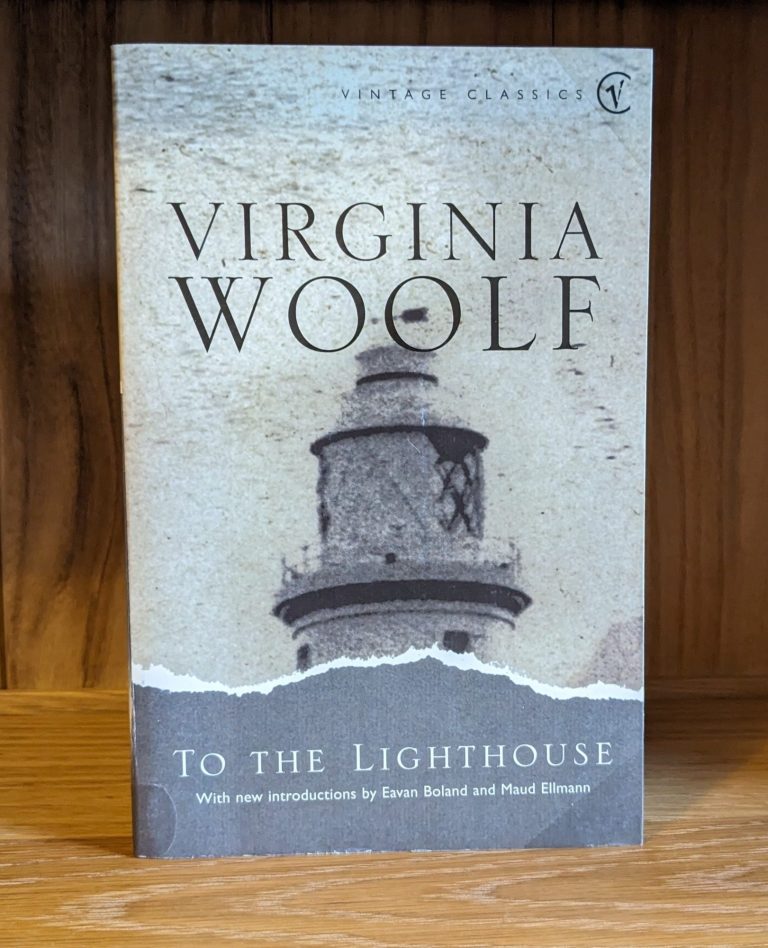
To the Lighthouse - by Virginia Woolf
This book was the set book for our "Introduction to English Literature" course in our first year of study and I was entranced by the writing from the moment I started to read it.
According to the Vintage Classics copy I now own, To the Lighthouse is the most popular of Virginia Woolf's novels and - of those by her I've read so far - my favourite.
What draws me is not only the setting but also the place and inner worlds that the characters inhabit. It is one of those books that offers a temporary glimpse into the lives of various people - all connected to one another by the Ramsays - and weaves it into a tapestry of a particular way of being in a now lost era.
Another aspect that fascinated me about this book were the musings on time; the way it passes despite it being implored to stand still. The awareness that time must and will pass.
For me this feels reminiscent of the philosophical ideas on time - the felt and the measured time - expressed in the works of philosophers such as for example Henri Bergson and Edmund Husserl, which informed a lot of the modernist writings in the first half of the 20th century. Echoes of these different thoughts on time permeate the whole book, making it more fascinating.
In addition to that the images and the sense of place it conjures linger in the mind; embed themselves within the reader.
It's hard to describe its peculiar lure but for anyone interested in exploring Virginia Woolf's work I'd start here.
Shelf: glimpses of the 20th century; reflective & unhurried books; strong sense of place
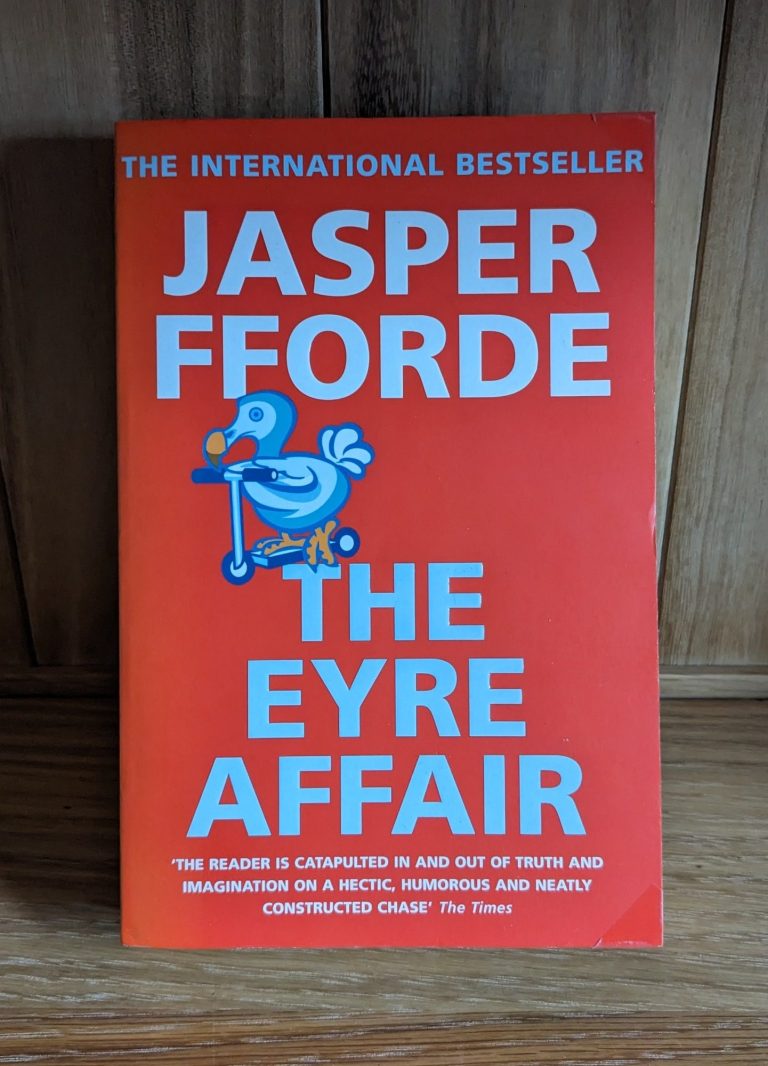
The Eyre Affair - by Jasper Fforde
I have to admit that the scooter on the cover has confused me for over two decades and I have still not found an answer to why it is there.
The dodo is obvious once you start reading as the heroine of the book - a woman called Thursday Next - owns a pet dodo named Pickwick (reengineered via a home-cloning set when it was all the rage).
And with this you are already on the roll and full on in 1985: a world where people are crazy about literature, the Goliath Corporation 'benevolently' rules (almost) supreme, the Crimean War between England and Imperial Russia is still ongoing and the Welsh borders are safeguarded vigorously against the English and that's only for starters.
Apart from 'delightfully and absolutely, gobsmackingly nuts in the best possible way' the book is so hard to categorise that I found it in bookshops in the general fiction, fantasy, crime & thrillers, humour and science fiction section. I've been wondering if I should smuggle it into the romance or literary section as well at some point, just to complete the picture.
Jasper Fforde's books are a fantastic romp and highly entertaining. I chose this one as an introduction to his work as it was the first of his books that was published and still holds up to re-reading many years after the first time.
Though published first, it was not the first book Jasper Fforde had written. Apparently he had 76 rejections - over a course of seven years for a few books - until finally getting accepted by a publisher. I seriously admire his stamina in getting his books out there and am so very glad he had that level of perseverance!
In a nutshell: The Eyre Affair is a brilliant, hilarious and sometimes mindboggling read with many twists and turns and a seriously good sprinkling of literature, weird history and excitement. A prior knowledge of Jane Eyre is handy but not absolutely essential.
(And if you get curious about the "book-world", you can follow up The Eyre Affair with Lost in a Good Book - its sequel - and deepen your journey into that particular world of the weird. )
Unsure if it's for you? Why not try reading the first chapter and see if you can stop?
Shelf: a shelf-of-its-own; alternatives which cover only parts may be: the crazier side of fantasy/science fiction; detective/mystery stories; fantasy science; bizarre and highly entertaining reads; might-draw-looks-when-read-on-public-transport-due-to-book-induced-laughter
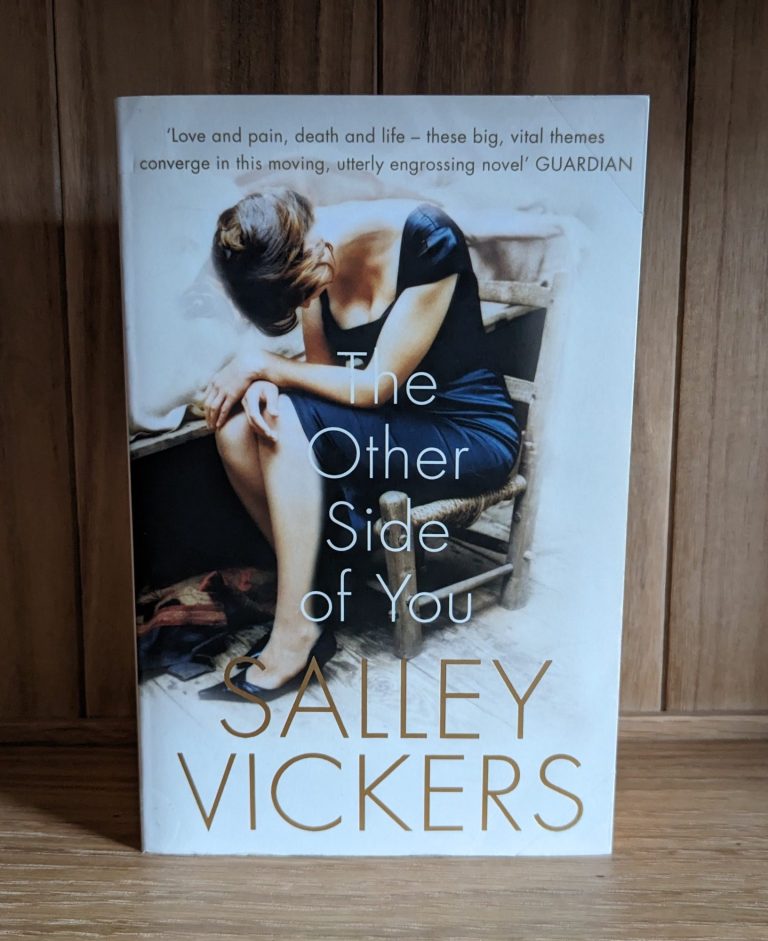
The Other Side of You - by Salley Vickers
Salley Vickers's fourth novel, The Other Side of You, is the one that - according to her at the time - took her the longest to write. It is also my favourite by her so far, the one that I connect with most deeply and consequently re-read most often.
The book is divided in four parts of varying length and narrated in the first person by David, who is both a psychiatrist and a trained analyst and whose 'particular bent' are suicide cases. They resonate with the hidden ‘other' side of him.
The story opens with David’s reminiscences about a past patient, Elizabeth Cruikshank, whose essence – many years on - he still finds hard to capture.
A serious suicide case who only just got found in time, Elizabeth has drawn a mantle of silence around herself, hinting at pain that goes very deep. It is not until a chance observation, relating to a painting by Caravaggio, opens up a brief window into her world that her story is finally revealed and explored.
One of the things I find fascinating is how immediate the story feels straight from the opening and the very first chapter; the way it - and its echoes of death, loss and grief - weaves its way into the reader's mind and stays there.
Despite - or perhaps because of - its premise, it does something I consider rare in fiction: it starts at a character's lowest point and works towards a resolution; a more mature and positively integrated state of being. As such it feels almost therapeutic.
It is also a fascinating but unassuming read, the book working on the reader the same way Elizabeth Cruikshank's person works on David.
I read this book at different stages in my life and its language, characters, subtle humour & observations and story captivates me each time, dovetailing in my mind. It is one of my absolute favourites.
Shelf: psychologically interesting but not depressing; perennial favourites; mesmerising reads
Three Wishes - by Liane Moriarty
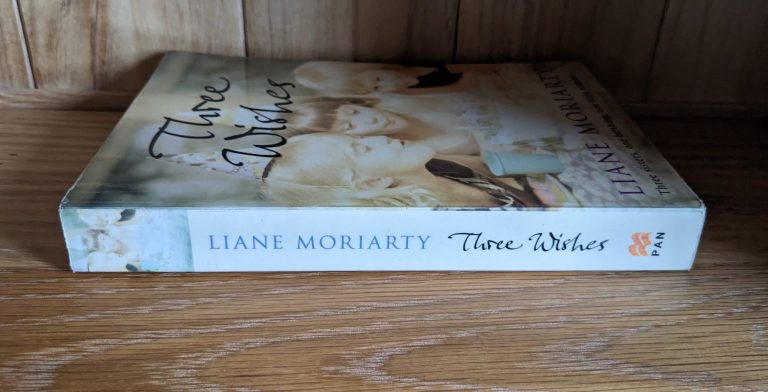
Let's get one thing out of the way at the beginning: I really don't like this cover.
My main quibble is the fact that the story of Liane Moriarty's first novel is about triplets: one set of twins and the 'odd' egg, who her twin sisters - as children are wont to do - once told that she was adopted. So a cover with three girls whose age so clearly differs is annoying, but it's the copy I own so there we are.
The book itself had me hooked from its hilarious prologue to the last page. It also meant that Liane Moriarty was one of those authors whose books' publication (like those of the two previous authors mentioned here) I awaited eagerly.
Three Wishes follows roughly a year of the three Kettle sisters' life and starts on their 34th birthday and an argument, which - memorably - culminates in a fondue fork being thrown by one of them.
This launches into a 'how it all began' and introduces us not only to the Kettle sisters and their family but also muses on the bond of sisters and on what who knows about or from others within a family; and what is hidden and/or unknown.
What makes it so highly readable, is that it combines laugh-out-loud comedy with real-life problems and even a darker seam in the narrative without getting bogged down by it. It stays light but has depth at the same time.
An aspect I particularly like about this book, are the little titled musings and stories, narrated by other people who observe the triplets and their family, that are interspersed between chapters. These glimpses of someone else's view of an event are intriguing with regard to the story being told but also hint at that narrator's story; the possibility of another story within a story within a story so to say.
It is a great place to start your journey into Liane Moriarty's work and is - along with What Alice forgot - still one of my favourite go-to pick-me-up reads.
Shelf: pick-me-up reads; sisters; family tapestry; entertaining reads; cheery but with depth
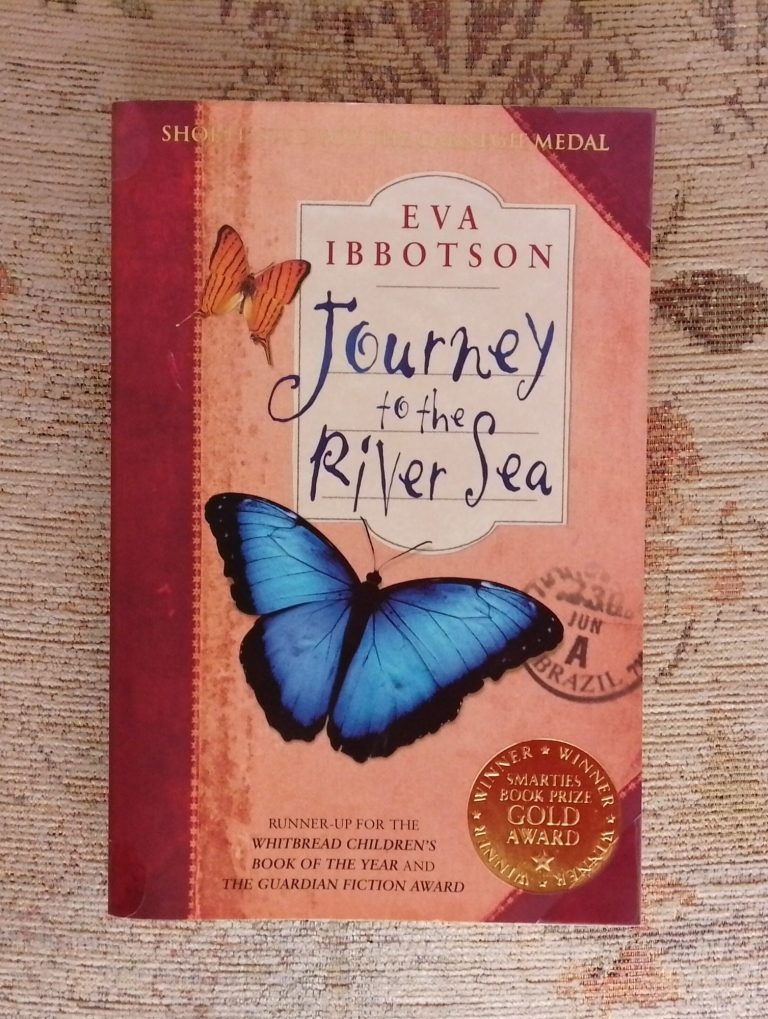
Journey to the River Sea - by Eva Ibbotson
This book is another of my absolutely favourite stories. It manages to achieve that fascinating balance between the classic story of an orphan - thrust into a new world that is different from her expectations - and a heart-warming and multiple-layered story, which feels incredibly fresh and comfortingly familiar at the same time.
Journey to the River Sea is a story that - according to Eva Ibbotson - had been playing on her mind for years before she finally wrote it and was one of her last books. Of the books by her I read, this one is my all-time favourite and the one I have given to quite a few children and adults of my acquaintance.
It tells the story of Maia - orphaned and living at a boarding school in London when we first meet her - who travels to Brazil to start a new life with some unknown relatives. She is accompanied by Miss Minton, a governess of forbidding looks with whom she clicks from their first meeting. What follows is a story that is full delights and dangers, enchantment and excitement, fascinating details and many twists and turns; just like the Amazon river the title of the books refers to.
To tell too much about the plot would spoil it for new readers but if you feel a draw to the stories of Frances Hodgson Burnett and to L. M. Montgomery's Anne of Green Gables, then this story may very well be for you.
Ibbotson's story has that old-world charm of those classics and a spark of humour to it that makes it a delightful and highly rewarding read (and re-read...). It is also very exciting!
Shelf: old-world-charm; adventure stories; future classics; comfy-sort-of-book; pick-me-up-read; books for children & adults; sense of place
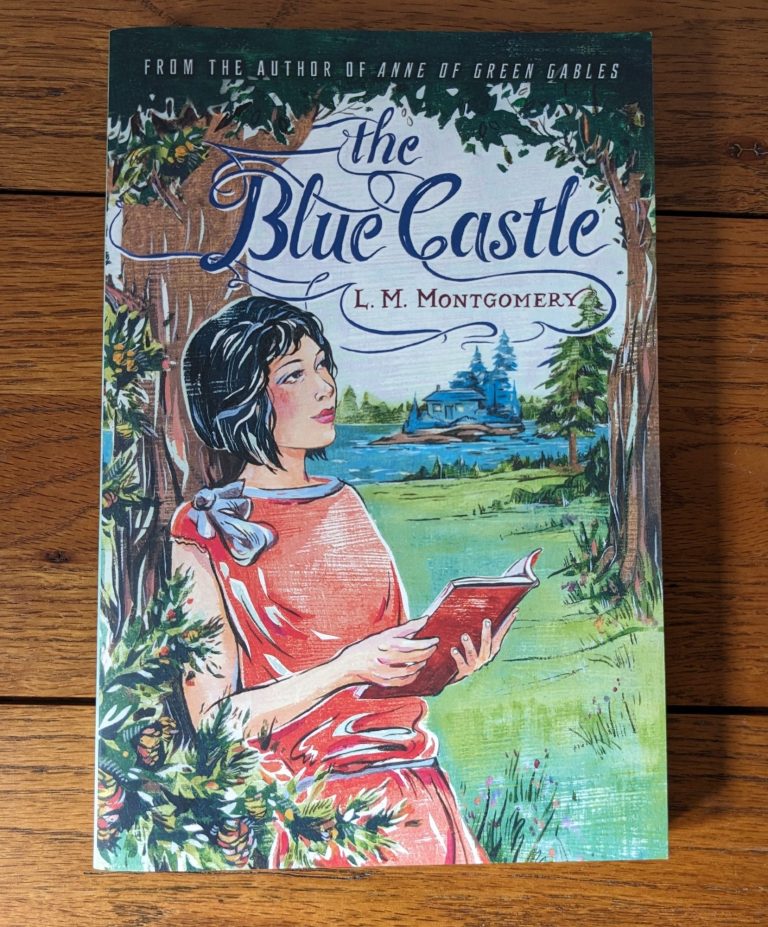
The Blue Castle - by L. M. Montgomery
This book - the first I read by this author - ended up in my recommendations one day. As the blurb, and admittingly the cover, appealed to me I ordered it and am very glad I did.
The story focuses on Valancy, who is 29 years old, unmarried and lives with her very controlling mother and a widowed cousin in a miserable house, without any prospects of this ever changing. One day, encouraged by a passage she read in a library book, she takes a decision that would scandalise her clan and a very different possibility of living her life opens up to her.
The book is a quiet but also very wittily observed story of a woman choosing her own path, free from the customary restraint she endured previously. It feels very fresh and does not at all give the impression of being almost a hundred years old. The nature descriptions contained in it breathe life into the Canadian seasons and allow you to witness them in the same way Valancy does through the writings of her favourite writer John Foster.
It is also a book about second chances, the company of people attuned to you and one of the most beautiful books I have read. It is a story you can return to again and again and an absolute gem.
Shelf: unusual 'coming-of-age' book; atmospheric reads I came across by accident; comfy-sort-of-book; friendship-love & finding yourself; sense of place
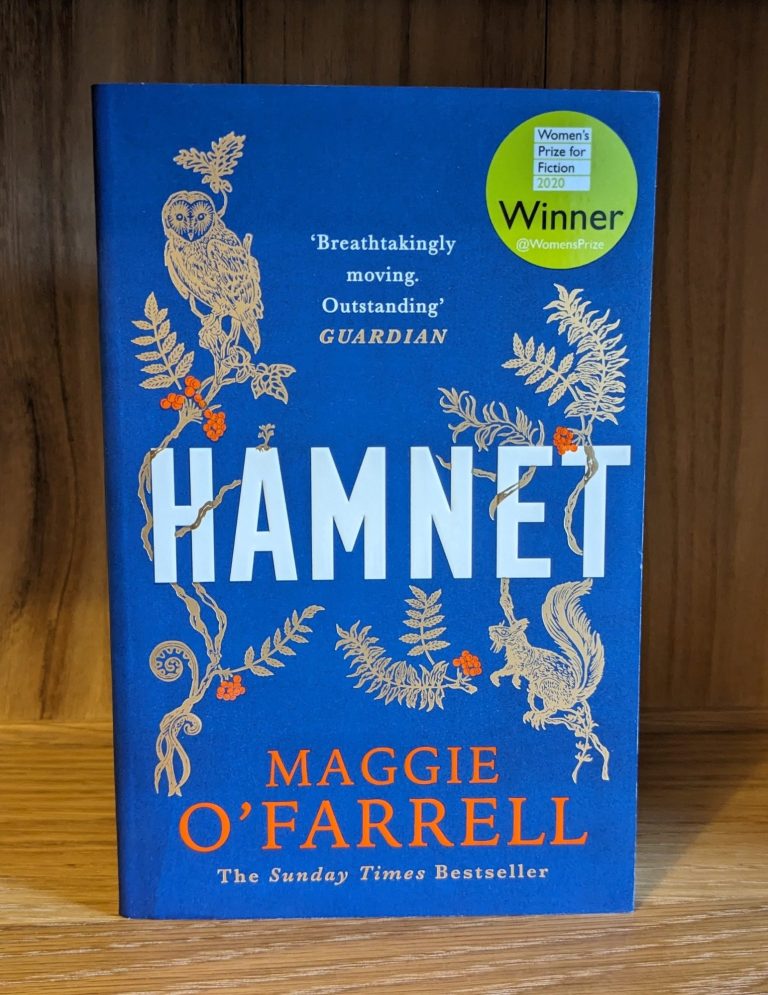
Hamnet - by Maggie O'Farrell
I have wondered about the possible connection between the name of the play and that of the famous playwright's son for quite some time. So despite the fact that I tend not to read books that can be classed as 'historical' novels, I couldn't resist buying this one.
Then, knowing what had happened to the real-life Hamnet in summer 1596, I was unable to bring myself to read it for a long time. So it stayed in one of the piles of unread books until a friend of mine suggested I move it up on my reading list. Intrigued by the way he said it I did and am so glad I listened to him.
This reimagining of what might have been is a rare work that will stay with you long after you finish reading it. I am fully aware of the fact that this is what a lot of reviews say about books, but in this case there is no other way to describe it: the way the characters come alive between the pages, the atmosphere that is conjured by the words used to describe the everyday life in the 1590s and 1580s, the way you seem to feel and smell the place; how you can practically see the motes of dust dance in that shaft of sunlight falling through the window into the house.
For anyone unsure about what to expect - and without wishing to give too much away - it feels like going on a journey. One that alternates between the now - Hamnet in the summer of 1596 trying to find help for his twin sister Judith - and their parents' story - a young Latin tutor with worlds inside him falling for an unusual woman, eight years his senior, before moving beyond both of these events.
It has been a long time since a book got under my skin the way this one did; I lack the words to do it justice. The story felt utterly mesmerising, captivating and haunting. More importantly, it holds you, compelling you to observe what is happening to those people you meet, as if you are standing just a little to the side of a stage, enthralled by the action unfolding and unable to turn away.
It touches you, leaving a trace - like an imprint - as evocative as the play, its author and his family, whose names and experiences linger in the readers' minds long after the book is closed.
Shelf: Shakespeare and his time, mesmerising reads, atmospheric reads that captivate and reach inside you
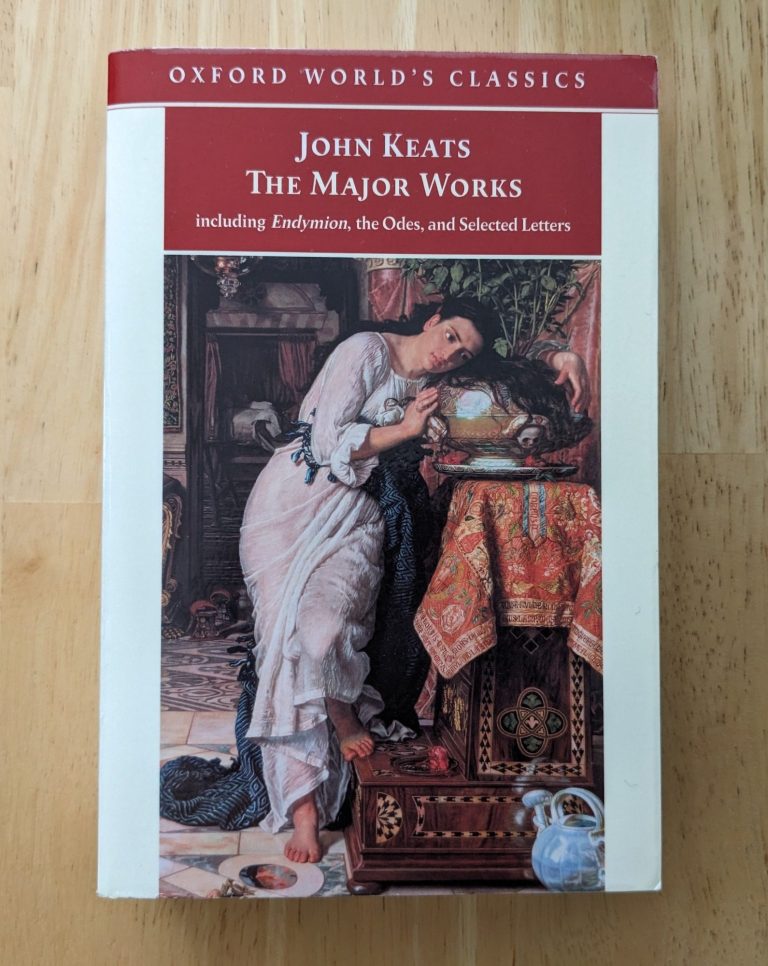
The Major Works – John Keats
The copy on display here, is the one I splashed out on for a seminar on John Keats’s poetry, which had this as the suggested text. Up until then I had only ever owned a small - but very practical pocked-sized – volume, which contained most of the sonnets, odes and some extracts from longer poems. It was one of my most re-read and influential books for a few years.
You can lose yourself in the beauty of Keats’s language, words and imagery; in the moods he expresses and captures. His poetry truly - to use a word from his letters - ‘dovetails’ in your mind.
John Keats was the youngest of the second generation of English Romantic poets and in my opinion his poetry far outshines that of Lord Byron and Percy Bysshe Shelley. Like the latter’s, Keats’s poetry only became really popular after his death especially when it was taken up by the Pre-Raphaelite Brotherhood. The image on the copy shown here is of one of William Holman Hunt’s paintings based on Keats's “Isabella; or The Pot of Basil”.
What I personally find almost as fascinating as his poems are some of the ideas expressed in his letters, particularly the concept of Negative Capability.
This is famously described in a letter from December 1817 to his brothers George and Tom Keats in these words: “at once it struck me, what quality went to form a Man of Achievement especially in Literature & which Shakespeare possessed so enormously – I mean Negative Capability, that is when man is capable of being in uncertainties, Mysteries, doubts, without any irritable reaching after fact & reason”. This quality, in his view, allows an artist to create and influenced the view of many artists who came after him.
For anyone interested in reading some Keats but unsure where to start, I’d go for: “Ode to a Nightingale”, “To Autumn”, “To Hope”, “La belle dame sans merci”, “Isabella; or The Pot of Basil”, “When I have fears that I may cease to be” or “Sonnet to Sleep”.
A lot of these contain lines that a reader or listener will recognise. "Isabella" retells a story from Giovanni Boccaccio's Decameron.
The language of Keats is one to fall into, explore and revel in.
Shelf: poetry; the beauty of words
(Source of quote: Keats, John; The Major Works; Oxford World’s Classic, Oxford University Press, 2001, p. 370)
If you ever happen to be in the northwest of England with some time at your hands and enjoy exploring art: the Lady Lever Art Gallery in Port Sunlight and the Walker Art Gallery in Liverpool have some stunning examples of Pre-Raphaelite paintings that can easily vie with those in London.
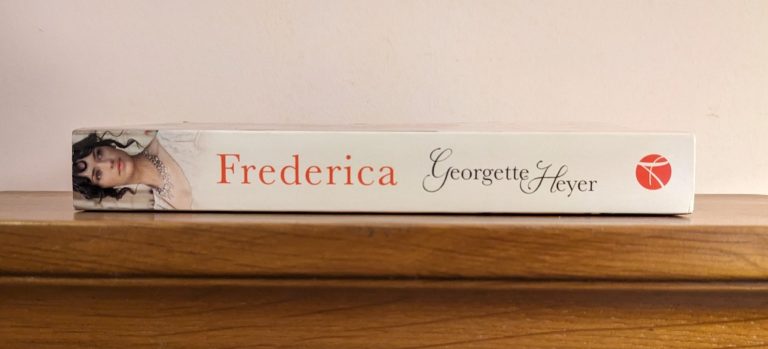
Frederica – by Georgette Heyer
If – like me – you happen to have a tiny ‘reading-snob’ living in the far recess of your mind, and would consequently feel that books by Georgette Heyer may not really be to your taste, I would – if you enjoy Jane Austen’s wit – challenge you to read the first page of Frederica and see if you can do so without bursting into laugher.
The blurb on my copy was a little misleading but that didn’t matter at all, as the book can speak for itself and is a delight all the way through.
The observations of the characters’ foibles, impulses, behaviours and turns – narrated in the dry wit which is reminiscent of the best of Austen’s work – are highly entertaining and may tempt you to see what else Georgette Heyer has to offer.
Beginning in April, at the start of the London season, the story roughly follows that of the Marquis of Alverstoke, a confirmed bachelor perpetually bored by society, who makes the acquaintance of his distant cousin Frederica Merriville and becomes embroiled in her rather chaotic and unconventional family.
What unfolds is a rare treat; a true comedy of manners and a story that will make the initiated collapse into giggles whenever they hear the term ‘Baluchistan hound’.
It is highly readable, delightful and a real pleasure to discover!
Shelf: hilarious romps; regency novels; romance; cheery-sort-of-book; comedy of manners; Jane Austen and her times
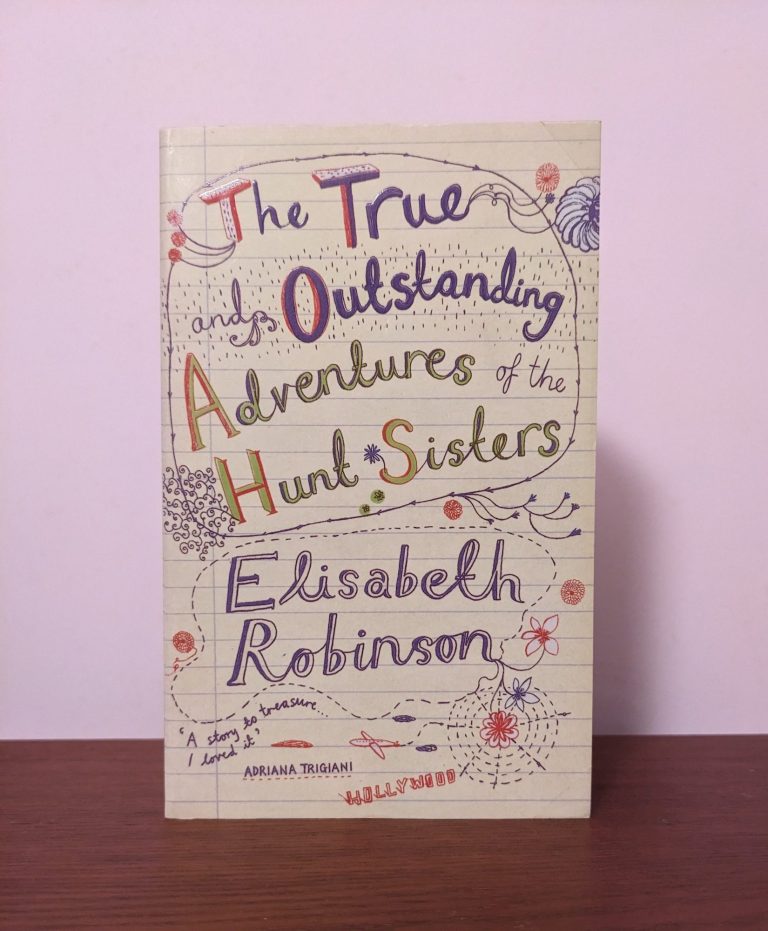
The True and Outstanding Adventures of the Hunt Sisters – by Elisabeth Robinson
I have owned a copy of this book for twenty years and – despite the subject matter – it is not on the depressing reads shelf.
Instead, it really does what the quote which prefaces this epistolary novel seems to hint at: give hope - or at least allow you not to give up on hope - even in the worst times life can throw at you.
The story - narrated by Olivia Hunt in letters and emails - spans a bit over a year and a half and presents us with a family at one of the worst times of their existence: a dismal medical diagnosis for Maddie, optimistic, cheery and fierce younger sister of the first-person narrator.
From the first letter to her best friend Tina, where we meet Olivia – about to capitulate in light of the difficulties of navigating Hollywood as a producer – through to the letters that follow, we experience loved ones in the grip of one of the worst things that can happen and see them navigate these unchartered paths and rally their strength, while trying to find a way to muddle through this upheaval.
The novel successfully manages a fine line between the portrayal of a family in crisis and a biting - sometimes hilarious - satire on the workings of Hollywood. The first-person narrator is vibrant, determined and somehow the glue that holds many different things together. We are also left with very clear impressions of the personalities of the different characters. It makes for a brilliant, sometimes challenging, read that will leave you wrought out but also oddly taken with it. It feels incredibly close and authentic and – at times - even strangely uplifting.
Depending on what type of reader you are, you may want to have some tissues close.
I found that the novel withstood the passage of 20 years’ time between the first and second read fabulously; its essence is still encapsulated perfectly in the last letter of the book. Its characters and their stories will remain with you.
Shelf: sense of place – family; family bonds; slice of life; epistolary novels; Hollywood machinations; vibrant narrator and sister; tackling life head-on
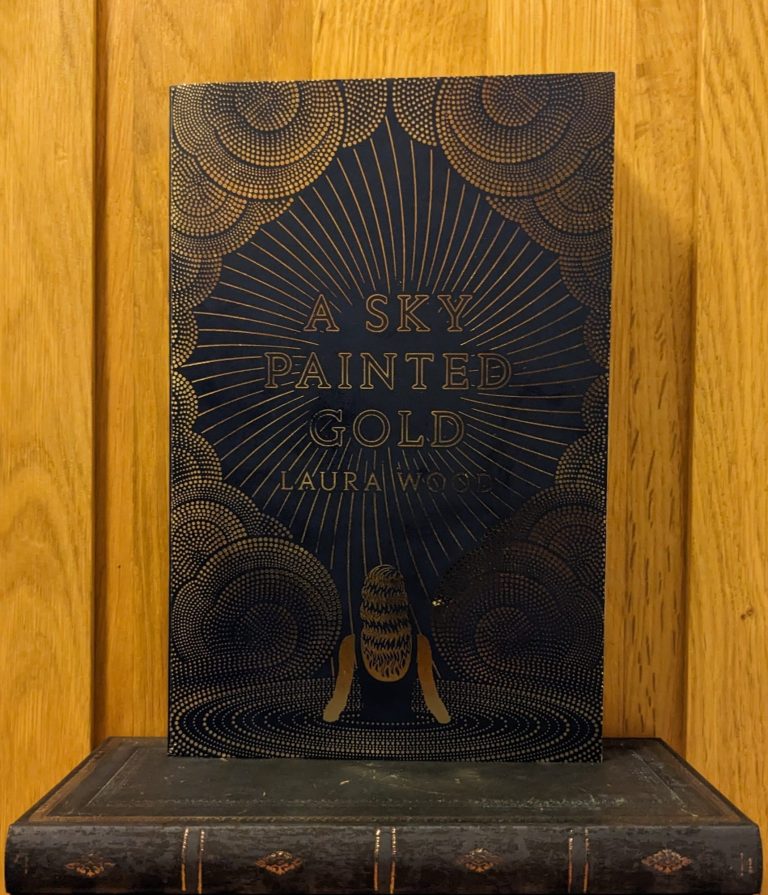
A Sky Painted Gold – by Laura Wood
This book was a birthday present I discovered in a small, bright, independent bookshop in Conwy.
The blurb and the quotes from F. Scott Fitzgerald's The Great Gatsby hinted at something dark and possibly unsettling, but I was so taken with the prologue and the book's artwork that I couldn't resist it. And as I had been 'bookless' for a couple of days already, I started to read it straight away the evening I got it.
Without wanting to give away too much, I would like to mention that - though reminiscent of Fitzgerald's outsider first-person-narrator glimpsing a different world for one languid summer - the book also made me think of Cassandra Mortmain and her family from Dodie Smith's I Capture the Castle. Despite these echoes it is very much its own story; and one that I have found myself return to at various points in time for the sheer enjoyment of it.
I have given copies of this book to adult and young adult readers of my acquaintance, some of whom have passed it on further to several others.
A Sky Painted Gold is a coming-of-age and true summer story set by the sea in Cornwall in the summer of 1929.
First-person-narrator, Lou (short for Louise), loves her family but feels a little crowded by them as well and with her older sister Alice's marriage, Lou's life is changing irrevocably. When the glamorous owners of the sprawling house on the island, across a causeway from Lou's village, come to stay for the summer Lou gets drawn into their world, as inescapably as the reader gets drawn into hers.
For anyone unsure about whether or not they fancy it, I'd recommend reading the prologue and see what you think.
Shelf: golden summers; coming-of-age; books-set-by-the-sea; sense-of-place; bustling family; old-world-sort-of-feel; sibling ties; writer-narrator

The Burying Beetle - by Ann Kelley
The Bower Bird, the second book in the Gussie series, is my favourite in this series but The Burying Beetle is where we first meet our first-person-narrator: Gussie.
In an August that feels more autumnal than summery, Gussie, twelve years old and living with a heart defect that she's had since birth, allows us a glimpse into her world. Aware that her time is short, she is planning to make the most of it!
Living with her mother in a cottage by the sea in Cornwall, her zest for life - and the humour contained in her observations - sometimes makes you forget the life-threatening illness she lives with and laugh out loud at the comments she makes. Gussie is curious, vibrant, fascinated by the world around her and loves connecting with people. Her thirst for life and her interest is infectious.
This book is a beautiful contemplation of life, nature, memory, family and human connections. It is a story that stays with you and allows you to appreciate the small things in the world.
Shelf: defiant narrators; books for children and adults; sense-of-place; nature; memory; zest for life against the odds; tricky but rewarding subject matter; family relationships
In case you'd like to order directly from the small Scottish press which printed these titles, please see the link below:
The Penderwicks on Gardam Street - by Jeanne Birdsall
The second book in a series of five, but fully equal to being treated as a standalone novel, The Penderwicks on Gardam Street is one of my absolutely favourite books and an annual autumn re-read. It is probably also the book that I have distributed most widely among my friends and acquaintances over the years as it appeals to so many different ages and readers.
Warm, charming, hilarious, cute and incredibly entertaining, it tells the story of the four Penderwick sisters - Rosalind, Skye, Jane and Batty - intent on saving their father from the mortification of dating and themselves from potentially ending up with an unsuitable stepmother.
The comedy that ensues under the guise of the sisters' 'Save Daddy plan' will have you in stitches; struggling (and likely failing) not to laugh out loud. It will leave you with a fuzzy, comfy, 'aww' feeling when you finally close the book.
Shelf: comfy-sort-of-book; hilarious reads; books for adults and children


Spirit Houses - by Die Booth
I first came across Die Booth's writing more than a decade ago and have admired it for a long time. A while back I finally decided to allow my curiosity to overcome my habitual and deep-rooted resistance to 'creepy' books (or 'horror' as it was termed) and bought a copy of Die's novel Spirit Houses at a tiny book fair. The sticker on the book stated: novel - adventure - creepy - 1930s vibes - dark academia - exciting; and I couldn't agree more!
From the very first page I was hooked. The characters, setting, world and mystery of the story intrigued me and - best of all - it took me well into the middle of the book before I was even beginning to pick up the threads and starting to form any theories of how exactly things hung together.
Add to that the fascinating and detailed vignettes, unique and drawn by the author, that introduce each chapter and you realise you are holding a marvel of a book.
Despite my familiarity with some of Die Booth's shorter fiction (which is also incredibly vivid!) I was still amazed by how much this book worked on my mind. I had images in my head during reading and also in between when I wasn't. The world built by those words between the pages intruded on my mind so that even now - years after first reading it - I can easily sink back into Manda's world and see everything as if I had witnessed it firsthand. It is incredibly immersive.
The story is so much more than can be summarised in a short introduction. I honestly recommend trying it for yourself (please see the link to how you can do that below). It is probably especially good to explore it in the darker months of the year; perfect for October to late January. Despite the genre, the book is surprisingly funny at times, which made reading it all the more enjoyable.
I seriously hope that this will not remain Booth's sole novel!
Shelf: unexpected stories; adventure; adult fantasy/creepy stories; vivid and immersive writing
If you'd like to read the blurb or into the first chapter of the novel, then please visit Die's website on the link below:
https://diebooth.wordpress.com/about-2/
Greenglass House - by Kate Milford
A friend told me about this book about ten years ago.
I then read it first around Christmas that year and - after that - waited for the next year to come round to give it to a friend of mine, who - in turn - now re-reads the story on an annual basis.
This book is one of those perfect reads, which not only greets you with an amazing cover that matches the story, but also has individual vignettes for each chapter. In addition to that it manages to cocoon you and keep you hooked from the very first page.
Set in Greenglass House, a smugglers' inn on top of a hill - reachable by cable car or a steep climb - the story unfolds as a perfect mystery with a large cast of seemingly unconnected characters, who appear to have come together by pure chance.
The 'detectives' are twelve-year-old Milo, the innkeepers' adoptive son, and a girl named Meddy.
It is an exciting, highly engaging but also cosy read with a brilliant resolution to the various strands of the story.
It is one of those books that can be thoroughly enjoyed by children and adults alike and is perfect for curling up with.
Shelf: mystery; fabulous setting; atmospheric winter reads; intriguing stories; cosy-sort-of-book; books for children and adults; sense of place


Midnight for Charlie Bone - by Jenny Nimmo
Midnight for Charlie Bone is the first in a series of eight books, originally planned for less but apparently the story grew, and I often wonder why these books aren't talked about more. I also love the original cover illustration by David Wyatt!
I once took the gamble and gave one of my young cousins the entire set (instead of the first book as a 'trial' only) and he devoured them within a week, reading late into the night. He is a quick reader but he was 10 or 11 at the time and completely and utterly hooked!
This book introduces us to ten-year-old Charlie, who lives with his mother, two grandmothers (one kind and one scary) and paternal great-uncle in a house in an old cathedral city opposite the road from his best friend Benjamin.
When a strange photo gets mixed up with his own Charlie discovers that he can hear people in photographs talk. This sparks a series of events that lead Charlie to become enrolled as a pupil at Bloor's Academy, a place that specialises in the arts - music, drama and art - but also takes in children with more peculiar talents like Charlie's ...
What I enjoy about these books is the setting within the sometimes rather sinister academy, the ancient town where Charlie lives, the different friends he makes and how family stories and secrets play in and are uncovered. These books are atmospheric reads, with interesting developments, great characters and a fascinating resolution. They are a true pleasure and brilliant to curl up with in a comfy place.
Shelf: atmospheric reads I came across by accident; books for children and adults; adventure; cosy-sort-of-book; friendship; books with pets; a touch of magic; evocative setting
The Camomile - by Catherine Carswell
I came across this book in the tiny Cestrian gem 'books on the walls', an independent bookshop with a unique concept of being not only a bookshop but also a small nugget of a bygone world; where a record player supplies the soundtrack and those, who don't wish to browse for books, can wait for those who do while enjoying a coffee or tea and a cheese scone. The books are placed in a way that - mostly - you have no idea what you'll discover when browsing. For me this adds to the charm as you can't hone in on certain sections and stay with what you know, but are invited and encouraged to look a bit further afield from the well-trodden path.
The Camomile caught my attention with its Art Nouveau lettering and pattern on the spine, which took me back to a trip to Charles Rennie Mackintosh's building and interior design for the Glasgow School of Art many years ago. Looking at the back I was greeted with a quote from the book exclaiming: "I have a Room! A room all to myself and away from home!"
As an admirer of Virginia Woolf's work those words felt very familiar! The introduction of The Camomile - first published in 1922 - then went on to inform me that it was set in early 20th century Glasgow and is considered a fictional counterpart to Woolf's A Room of One's Own. I began to read into it and after meeting Ellen Carstairs, our narrator, who is recording her life for her friend Ruby in London I was too intrigued to leave it for another day or at some point in time...
The story that unfolds covers a bit more than a year and feels very much as if it should be put into the category of a Bildungsroman (a 'coming-of-age' like others put forward at the turn of the previous century) as Ellen's way of thinking and development shift markedly within the course of that year and her personality becomes more defined and assured.
It is an interesting and entertaining book to read but also a fascinating glimpse into a past world and a different type of perception that came with that world. I am very pleased to have discovered this book!
Shelf: a-glimpse-of-the-twentieth-century; sense of place; Bildungsroman ('coming-of-age'); epistolary novel; vibrant heroine; Glaswegian novel; books set in Scotland

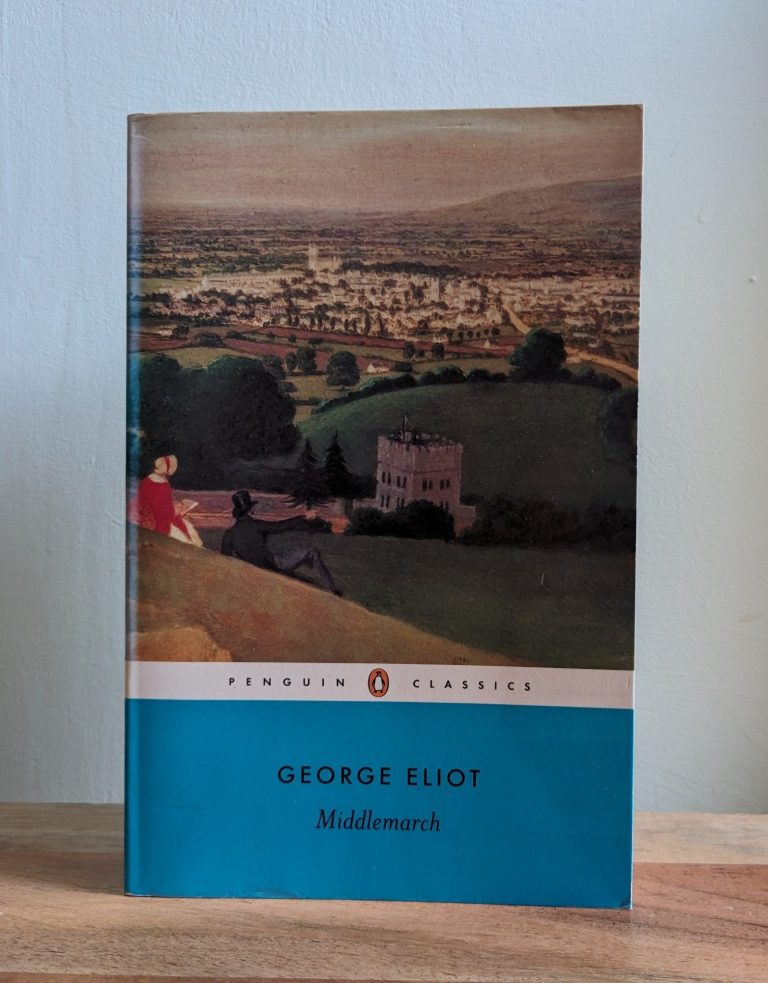
Middlemarch - by George Eliot
This is a tricky book for me to write about so - before I try – let me make three confessions first:
1) I absolutely love and adore George Eliot's Middlemarch!!!!! Or to be completely honest: I was completely and utterly obsessed with the characters and the entire story while I was reading the book for the first time. A lot of people who came into contact with me at that time still remember it very vividly ;-)
2) the book was languishing on my shelf waiting for its turn to be read for easily five years… &
3) apart from always having been drawn to it as one of the great books in English literature, and having enjoyed Eliot’s writing in another book, my curiosity was piqued further by reading Virgina Woolf’s quote, endorsing it as “one of the few English novels written for grown-up people” on the back of the copy I bought.
"So what about Middlemarch?" you may wonder.
With a book like this it is hard to know where to begin, and anyone who's been reading about the books introduced in this section will have realised by now that I don't like giving away the plot, so I will only offer some of my impressions of the book.
If picked up at the right moment (basically when it feels like reading it is a very good idea right now!) then it can become highly addictive.
The descriptions of places, the writing, the characters, their concerns and struggles will draw you in and stay with you, possibly for many years afterwards. Set in the town of Middlemarch the book is a kaleidoscope of different characters, ranging from acquaintances, families and their connections held together by living in the same place and by what goes on in their lives.
A friend of mine likes to refer to Middlemarch as 'the mother of all soap operas' and despite the seeming cheek of this I can completely see what he means by that. The characters are intricately connected with one another and most of the action takes place in and around Middlemarch and it really has a 'chatty' feel to it at times, despite the obvious depth. You have your main characters but there are so many minor characters, which add to the richness of the whole, and you move between and among them with different strands being picked up - and temporarily dropped - at different intervals.
There were two things in particular that struck me. The first of those is that it isn't overly dramatic in what is happening on a large scale; there aren't any of those major life and death 'throwing yourself in front of a train' or 'dying quietly after your big trespass on society', as is common in so many other of the 'great' books from the 19th century but the drama happens on a smaller, more everyday-human scale, which makes it very relatable. The interest and tension seem to be more within the characters themselves (their internal struggles and even 'growing up') rather than in the happenings within society. Naturally the latter plays in but what made the book and its characters stay with me for over a decade is their humanity. Eliot seems to find something in even the most unpleasant characters that brings forth the reader's compassion and allows you to connect to them as part of the shared human experience.
The second thing that caught my attention, maybe because I was closer in age to those characters and their concerns when I first read the book, was that - except for Dr Lydgate who is given his professional title - the younger generation of characters (Dorothea, Celia, Fred, Rosamond, Will, Mary etc.) are usually referred to by their first names. I felt that it allowed me to connect to them more closely as there was less distance in the way they are named and referenced, while the older generation (Mr Vincy, Mr Bulstrode, Mr Casaubon etc.) are referred to by a Mr/Mrs and their surnames. It is subtle but had the effect of connecting me more strongly to the younger generations. Those characters felt more immediate and closer.
Middlemarch still feels like a place I spent time in and whose inhabitants have formed part of my world; whose lives and concerns touched me deeply.
I hope to read it again and that any readers who don't know it yet aren't put off by its length and status as a 'classic'. I read it solely out of curiosity and for pleasure and it was worth every moment of my time!
Shelf: highly readable; sense of place; quietly 'dramatic' and extremely human; one of my absolutely favourite books; fascinating reads; psychological depth but not depressing; a glimpse of the 19th century; classic; worth the time spent on it
(I do find it fascinating that one of the greatest writers of the 19th century chose to translate books into English under her own name, Mary Ann is or Marian Evans, but chose to create a pen name that included her partner’s first name, George, when writing fiction.)
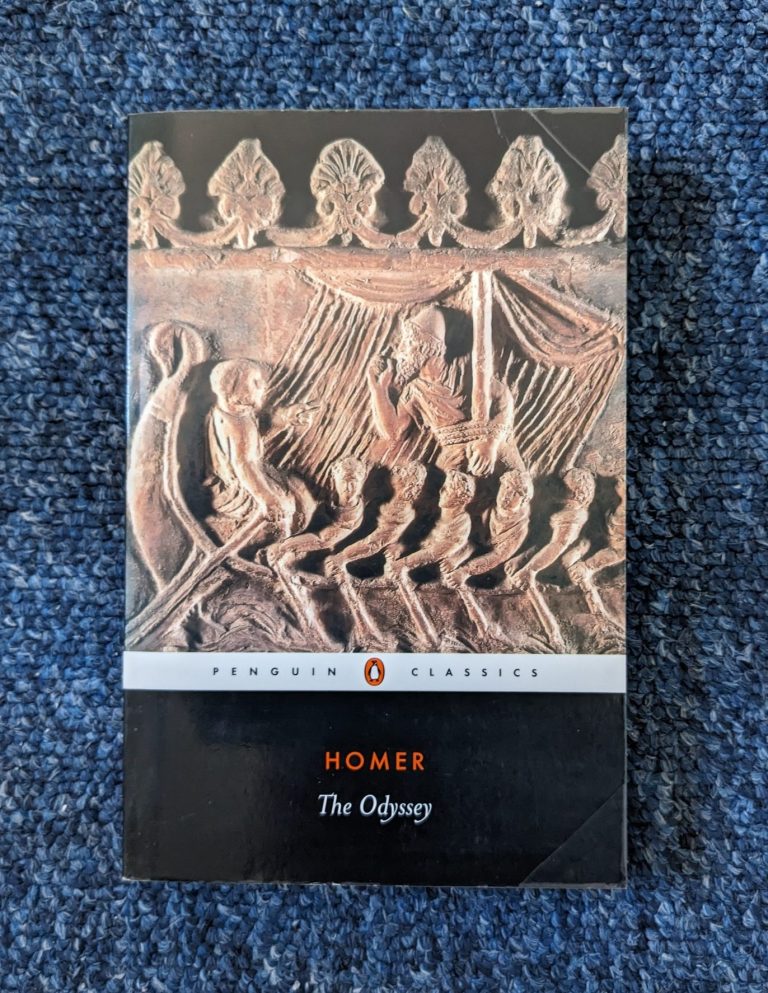
The Odyssey - by Homer
Stories from The Odyssey have fascinated me since I was a child and came across a book, which featured an image of Odysseus tied to the mast of his ship while listening to the sirens’ song. I didn’t read that book of retellings but my fascination with the image, its associated story and Greece stayed with me.
As one of the great epics in Western literature, the various stories from The Odyssey permeate our collective psyche. We may not know precisely where a story comes from but we may recognise it in paintings, depicting certain scenes, in the many art galleries or heard references to them.
What springs to mind for me is an illustration from a children’s book of the cyclops and his sheep, with Odysseus’s men hanging underneath them, John William Waterhouse’s painting of Circe Offering the Cup to Ulysses, depictions of Penelope, Odysseus’s wife, weaving on her loom while suitors besiege her or Odysseus listening to the sirens while tied to the mast of his ship. With all that it is funny that I shouldn’t have thought of reading The Odyssey until much later.
What sparked my first real interest in the actual text was a cheap copy of Chapman’s Homer, impulse-bought, which I then struggled to muster John Keats’s enthusiasm for. When I complained to a friend of mine that I couldn’t see what Keats saw in that translation he recommended I ditch it and get myself a copy of E.V. Rieu’s prose translation, which might offer me a more accessible introduction to the text instead. It was a very good piece of advice. Rieu’s translation is highly readable and a good starting point. I have read other translations since and am planning to read more as each – through the translator’s choice of words and expressions - throws a slightly different light on the various aspects; certain elements of the story stick out more than others in some translations, so the more versions you read the closer you inch to discovering the many layers and flavours of the work.
It may not be a popular opinion but for me The Odyssey is an adventure story with a lot of fantastical elements that can be enjoyed without the baggage of being a classic of classics.
What I found fascinating was that – though referred to already in the opening line as a “resourceful man” (Rieu), “man of twists and turns” (Fagles), “a complicated man” (Wilson) etc. – Odysseus himself does not appear until Book 5 (out of 24). There we find him sitting on the shore of an island, weeping for his lost home.
If you (like me) haven’t read The Iliad, it may feel like a bit of an anticlimax, meeting the great Odysseus – one of the heroes of the Trojan war - in person for first time, stuck on a beautiful nymph’s island, with tears in his eyes; but there we are. The book gets more and more interesting from this point on. There are many references to customs which bring to life the times the story was conceived in, descriptions of places, the involvement of the gods and of course the telling of stories.
The Odyssey is a rich and colourful tapestry of different strands woven together and a story to delve into. If asked I would recommend reading into several translations and see which one chimes with you. For me the Rieu translation was the first journey into the world of The Odyssey and a good starting point to a place I have since re-visited in different guises. I highly recommend giving it a try.
Shelf: adventure; highly readable; a glimpse of another time; classic story; mythology; great stories
If you are curious to know what other books live on my shelves, please visit Merrydale's Corner again next month for the next book.